
Water
What is being asked of us, a letter from the Blue Deer Farm

When I lived in New York City, I only thought about water in terms of rain, and I sulked when it fell.
The rain stopped me from going out, from grabbing a coffee on the corner, from walking through Central Park. It locked me between four walls.
Twelve years ago, I left the city for the Catskills. I tended The Sanctuary there for two decades. And then last year, after years of studying ancient wisdom with elders in Peru who kept speaking to me about the prophetic times we are entering and what those times would ask of each of us, after sitting with that knowing until I could no longer pretend it was not also a knowing in my own bones, we crossed the Atlantic and bought an 18th century farm in Burgundy with twenty acres of land.
I remember sitting at fifteen thousand feet on a Q’ero mountain. An elder pouring chicha into the earth before he spoke. He told me, and I am paraphrasing in English what was offered in Quechua through a translator, that when the apus stop sending their rain to the lowlands, when the rivers begin to forget their own songs, the Pachakuti, the great turning over of the world, has already begun.
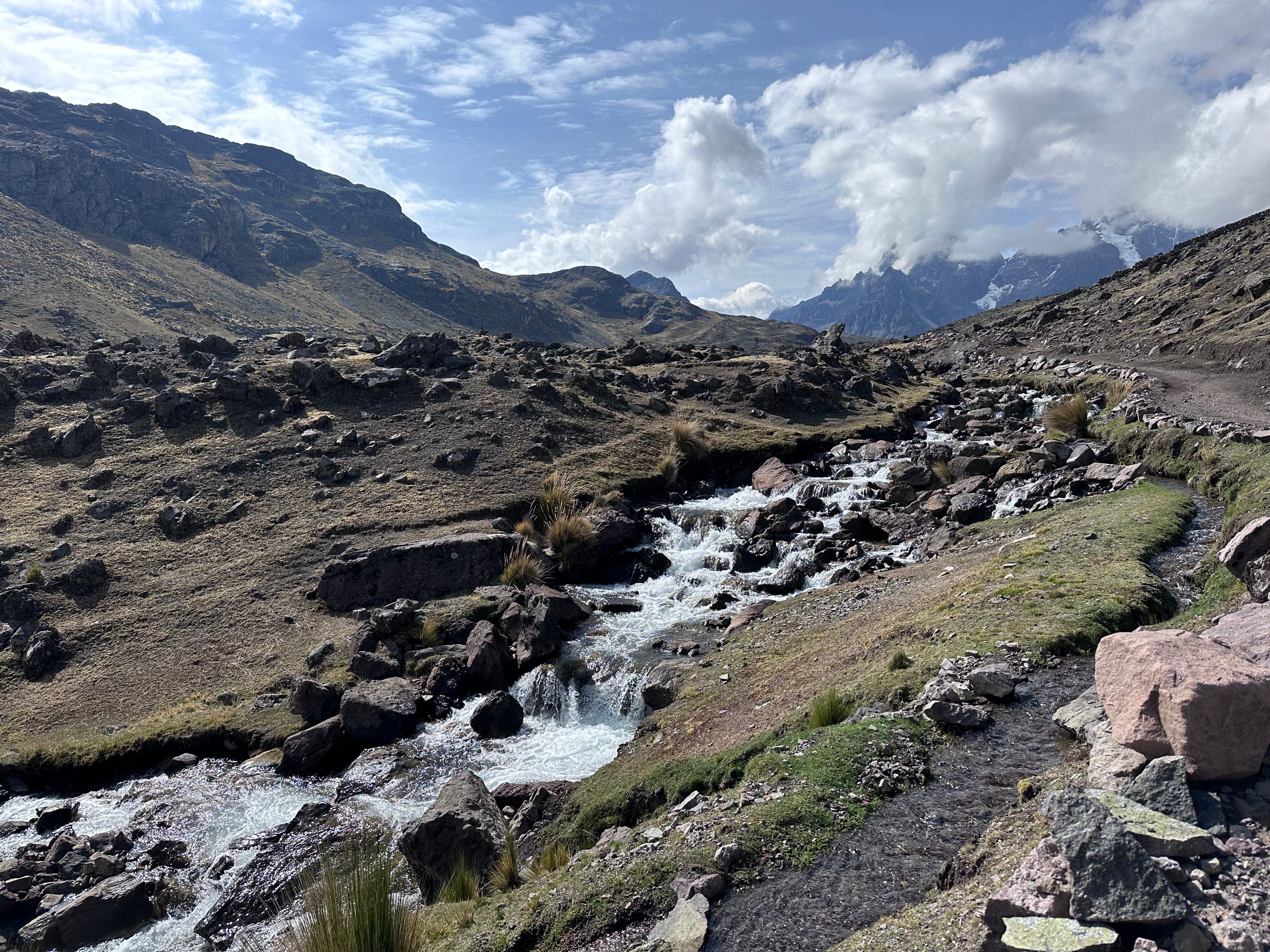
I did not understand him then. Not really. I understand him now, watering my young oaks in Burgundy at 9pm in 38 degrees.
The land here had been abandoned. A few old fruit trees still standing along the edge. A few nut trees. A walnut, a hazelnut here and there. And then mostly wild prairie. Tall grass. Wildflowers when they could find their way through. The sound of nothing being tended.
In the short year we have been here, we have planted. A spiral of 150 grapevines. Seventy truffle oaks. Hazelnuts inoculated with truffle mycelium that arrived as a birthday gift on the day I marked another ring around the sun. Fruit trees. Hedgerows. Whatever we could put into the ground, we put into the ground.
Trees we bought when we had three coins to spare (instead of new shoes).
Trees friends sent us, gifts of roots and prayer (the best presents on Earth).
Trees from the GoFundMe page of people who never met us but understood the assignment.
It is tiring to plant a tree.
But it is also unbelievably comforting. It relieves (a tiny bit) the massive destruction of forests happening, on industrial scale, everywhere else.
It is slow to grow, a tree.
One year later, most of ours reach our knees. Some reach our thighs. None of them give us shade yet. The wild prairie is still mostly wild prairie, with our small green soldiers standing up through it like tender prayers, sacred waiting.
So planting a tree is gratifying. And frustrating.
I hear it everywhere now: “We have to plant trees!” And yes. Of course we have to plant trees.
But planting them is not enough.
They also have to root. They have to grow. They have to survive. They have to live long enough to open into a parasol over the land.
The main ingredient in the magic recipe for a tree to thrive is WATER. And four stable seasons.
And for weeks now, the rain has not come. La pluie ne tombe plus. The French phrase sits heavier than its English cousin somehow. It carries the weight of every grandmother who ever stood at a window watching the sky and worrying for the wheat.
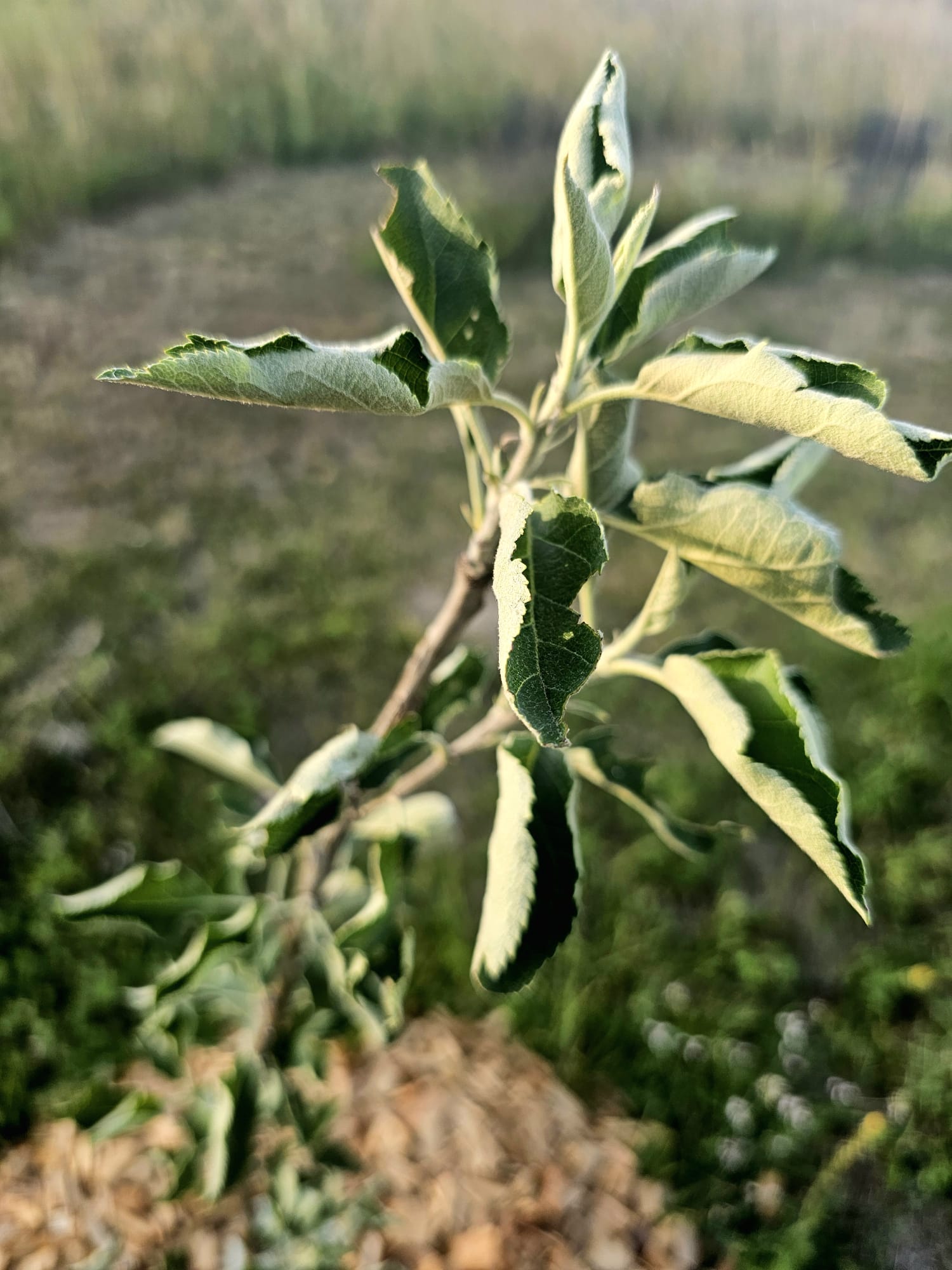
Some of my young trees, the ones I planted just months ago, are already losing their leaves.
Before the start of summer.
We have an enormous gift, two old rain water wells next to the farmhouse. The wells gives water freely, year round.
In a time when the temperatures are breaking every record, my garden and my young trees survive because of that well. Which means in all the other places without free water, without a devoted human at the end of a hose, the trees, and especially the young trees, are suffering and dying.
Because we humans can find some shelter from the heat (a thought for everyone living in a poorly insulated apartment right now). The trees cannot. Their roots are locked in the ground. Their crowns take the full sun directly.
Since the first heat wave hit in May, the energy I spend every day keeping my trees alive is equivalent to what I would normally spend in a whole summer.
As for the small basins and water stations I keep around the land, the heat is so intense that I have to refill them every single day so that the birds, the bees, the insects, the hedgehogs, and small mammals still have something to drink (think about that the next time uncle Robert tells you just good AC and insulation is “common sense”).
Before, when I planted a tree, I did it with joy and conviction, certain it would still be standing in 150 years, certain it would shelter birds and offer shade and fruit to Juliette and the generations after her.
Now, I plant it knowing that in 5, 10, or 20 years, the temperatures may be too high for it to survive at all. The elders in Peru were not lying. The Pachakuti they spoke about, the great turning over of the world, is here. We are living inside it.
And if the plan for humanity is to seal ourselves between four walls with the air conditioning on, watching everything else die through the window (birds, flowers, trees, the deer who gave this farm her name), then honestly. What is the point.
Yesterday, walking out early in the morning before the heat, I crossed paths with a mama deer and her fawn. The little one was leaping around her like a small flame, all legs and joy. They stayed on the path for a long time facing me because I froze. We watched each other.
I looked at them with my heart in my throat. And I thought, they too are coming out early because of the heat. And the humans. They too are suffering from the lack of rain, from temperatures that should not exist in June.
This is what the elders meant. This is what the prophecies were pointing at. The fawn at sunrise, panting in 38 degrees, while we argue in the comments about whether the climate is changing.
Take care of yourselves. And for those lucky enough to have a garden, a balcony, a tree on your street, take care of your little corner of nature that is suffering just as much as we are.
The prophecy is not coming. The prophecy is here. And it is asking each of us what we are willing to plant, to defend, to bury our hands in, while there is still time.
This weekend I’m going deeper into what those elders told me about this time we are inside of. The prophecies. What they say. What they are asking of each of us.
I am writing a long essay on them (weekly paid subs essay).
On Prophetic times. On the oldest meaning of the word, the initiation we are all standing inside, and what the seeress, the firekeeper, and the desert truth-teller have been trying to hand us across the centuries.
Becoming a paid subscriber supports my writing and helps us rewild 20 acres of land. Your gift helps rebuild the village and resist the Empire.
Stay close.
And stay wild,
Angell 🦌🔥
I recently finished The Overstory by Richard Powers, a novel that intertwines the lives of trees and humans in ways both heartbreaking and beautiful. Your story stirred something similar in me—the quiet grief of what is lost, and the hope contained in every act of planting. Thank you for planting. Thank you for sharing 🌱
Angell, you're making a very important point.
Here in Hungary, the Great Plain is our main agricultural region. It is drying out and gradually heading toward desertification. The reason is not only climate change. About 150 years ago, rivers were straightened, and floodplains were cut off by dikes so that humans could claim more land for cultivation.
Today, there are efforts underway—though progress is slow—to give floodplains back to the rivers. But that alone is not enough. We also need to plant trees, just as you are doing. And we need to plant them in the floodplains.
Trees function like the heart of the landscape: they help raise the groundwater table and keep water moving through the ecosystem. They drive the small water cycle that creates regular, gentle rainfall.
From foresters I have learned that oaks should be surrounded by drought-tolerant pioneer species, such as birches. These grow quickly, provide shade, and create leaf litter. In that layer of organic matter, fungi can thrive, including the mycorrhizal networks that help trees and other plants access and share water.
The work you're doing is both beautiful and deeply important. It sets an example for others. Thank you for writing about it and helping to spread this knowledge.